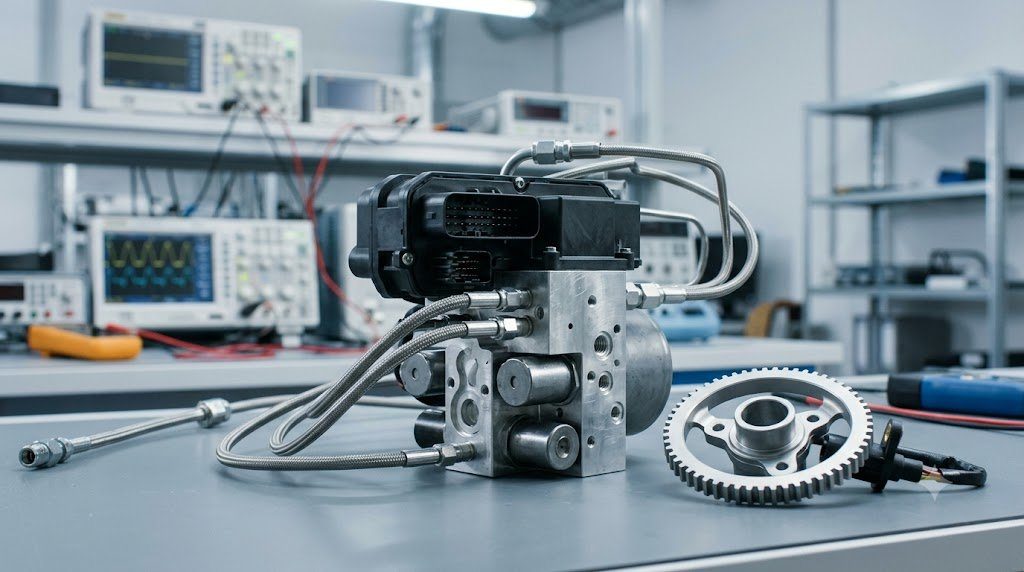
How ABS Prevents Wheel Lockup and Why the Brake Pedal Pulses

AUTOMOTIVE ENGINEERING / VEHICLE SAFETY SYSTEMS The Science Behind Anti-Lock Braking Understand how modern vehicles detect wheel lockup, regulate braking pressure, and help drivers maintain steering control during emergency stops. WHEEL-SPEED SENSORS HYDRAULIC CONTROL PEDAL PULSATION Imagine driving on a wet road when a vehicle suddenly stops ahead of you. You press the brake pedal … Read more
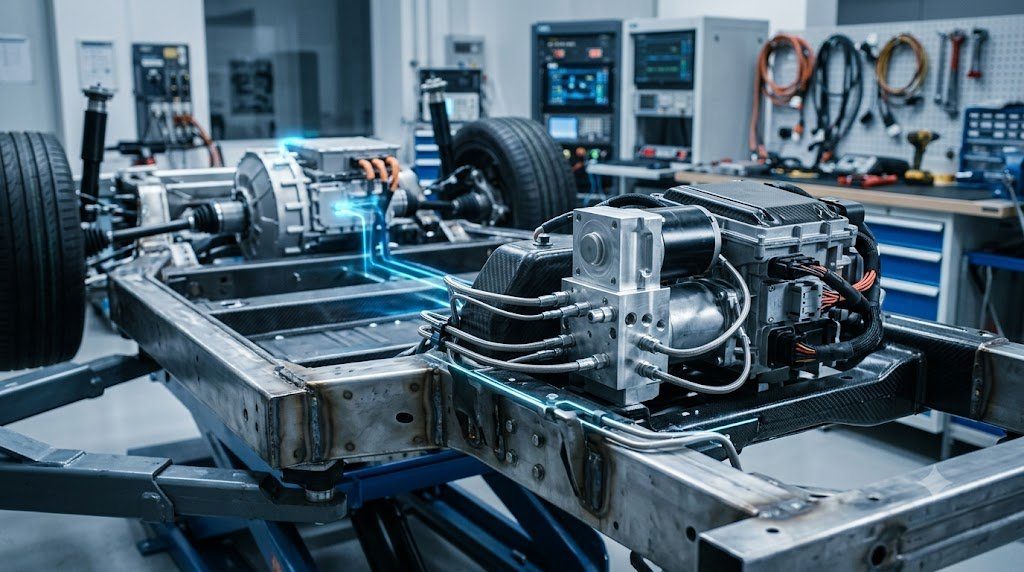

Regenerative Braking Systems: Electro-Hydraulic Blending, Brake-by-Wire Modulators and Energy Capture

In the transition toward hybrid and battery electric vehicle (EV) architectures, the conventional paradigm of wasting vehicle kinetic energy entirely as friction heat is obsolete. Modern electrified powertrains utilize Regenerative Braking, transforming the high-voltage electric traction motor into a generator to decelerate the vehicle while capturing up to 70% to 90% of recoverable kinetic energy … Read more

Brake Pad Tribology: Semi-Metallic vs. Ceramic Friction Formulations and Thermal Fade Mechanics

The physical interface between a stationary brake pad and a spinning rotor constitutes one of the most severe tribological environments in mechanical engineering. Under repeated deceleration, surface contact pressures reach 5 to 10 MPa while localized microscopic flash temperatures at contact asperities soar past 800°C to 1,000°C. Modern brake pad friction compounds represent intricate multi-material … Read more

Anti-Lock Braking Systems: ABS Wheel Slip Ratio, Hydraulic Modulator Valves and Wheel Speed Sensors

When an emergency stop is initiated on a slippery asphalt or ice-covered road surface, the clamping force of hydraulic brake calipers can easily exceed the available tire-road frictional traction, causing tires to lock up and skid. A locked tire loses all directional steering control and experiences reduced deceleration. The Anti-Lock Braking System (ABS)—first introduced to … Read more

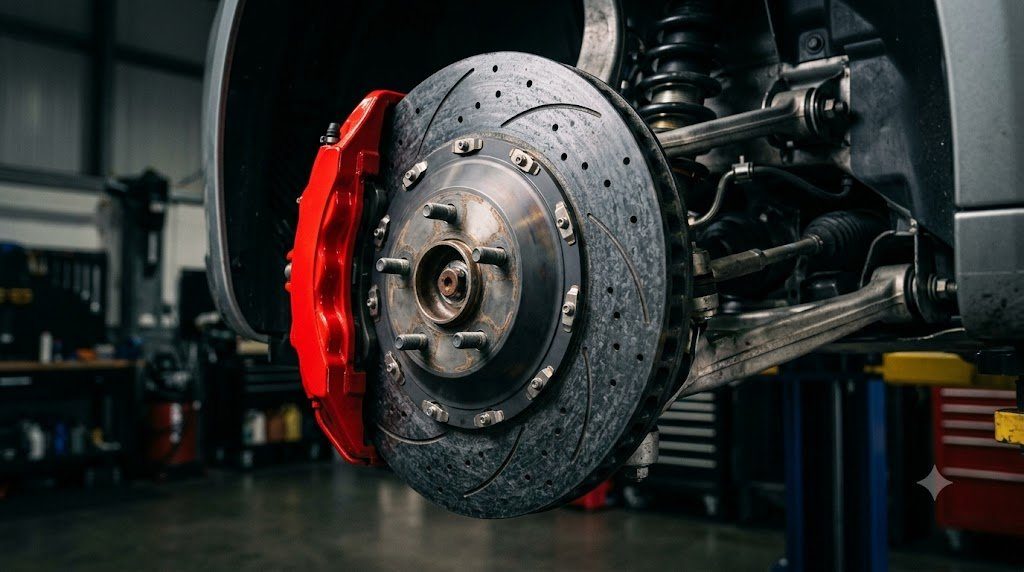
Hydraulic Disc Brakes: Rotor Metallurgy, Multi-Piston Caliper Clamping and Pascal’s Law

In automotive chassis engineering, the braking system is the primary safety-critical mechanism, responsible for dissipating kinetic energy into thermal enthalpy at deceleration rates that can exceed 1.0 to 1.3 g. At the core of every modern braking architecture is the Hydraulic Disc Brake, which utilizes fluid pressure multiplication governed by Pascal’s law to force high-friction … Read more