Regenerative Braking Explained How Electric Cars Recover Energy When Slowing Down
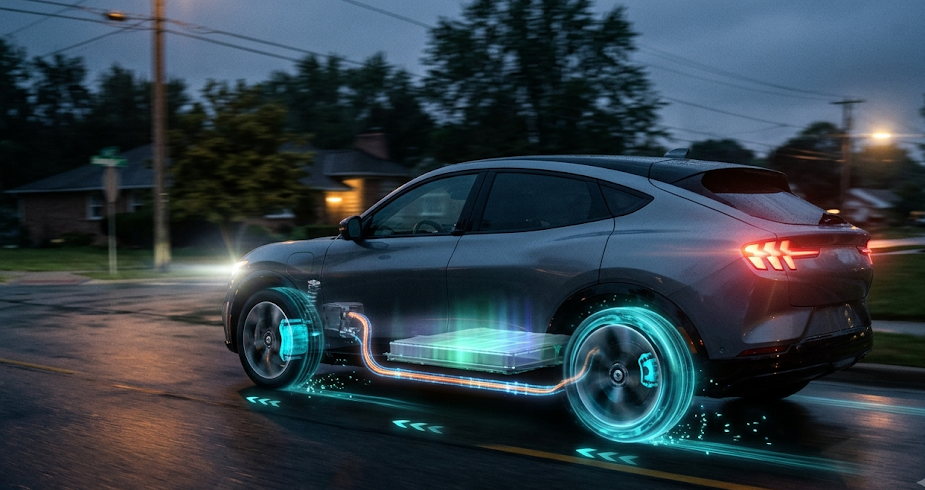
EV MOTION & ENERGY LAB / AUTOMOTIVE ENGINEERING Turning Motion Back Into Electricity Discover how electric vehicles use their motors as generators, capture energy during deceleration, and reduce the energy wasted during everyday driving. KINETIC ENERGY MOTOR-GENERATOR ENERGY RECOVERY Every time a moving car slows down, some of its kinetic energy must go somewhere. In … Read more
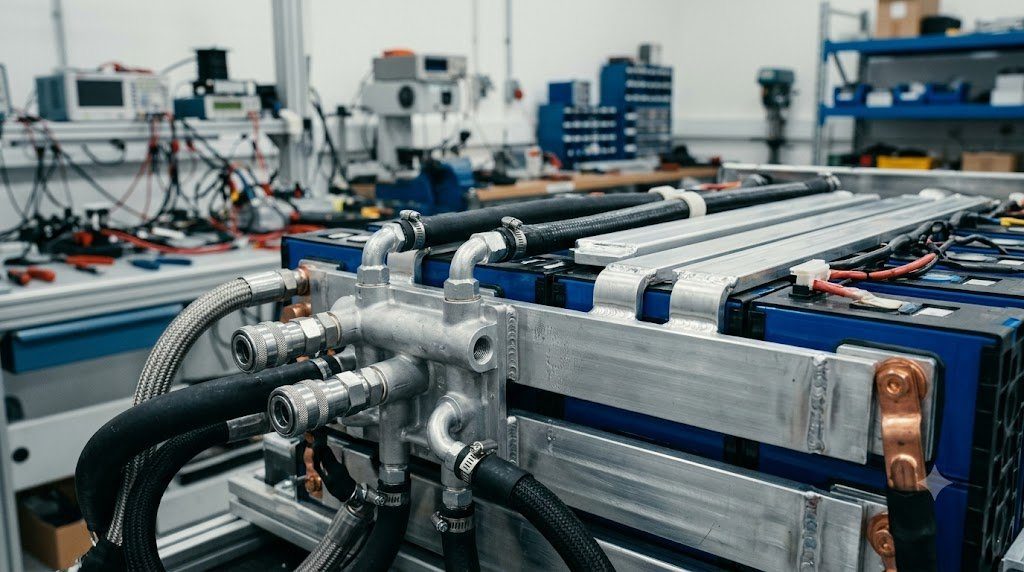
Battery Thermal Management Systems: Liquid Cold Plates, Immersion Cooling and Heat Pump Loops

The operational lifespan, fast-charging speed, driving range, and safety of a modern electric vehicle are governed entirely by its Battery Thermal Management System (BTMS). Lithium-ion traction cells function within an exceptionally narrow ideal thermal window—strictly between 20°C and 35°C (68°F to 95°F). Temperatures below 0°C severely restrict charging rates and trigger lithium plating, while temperatures … Read more

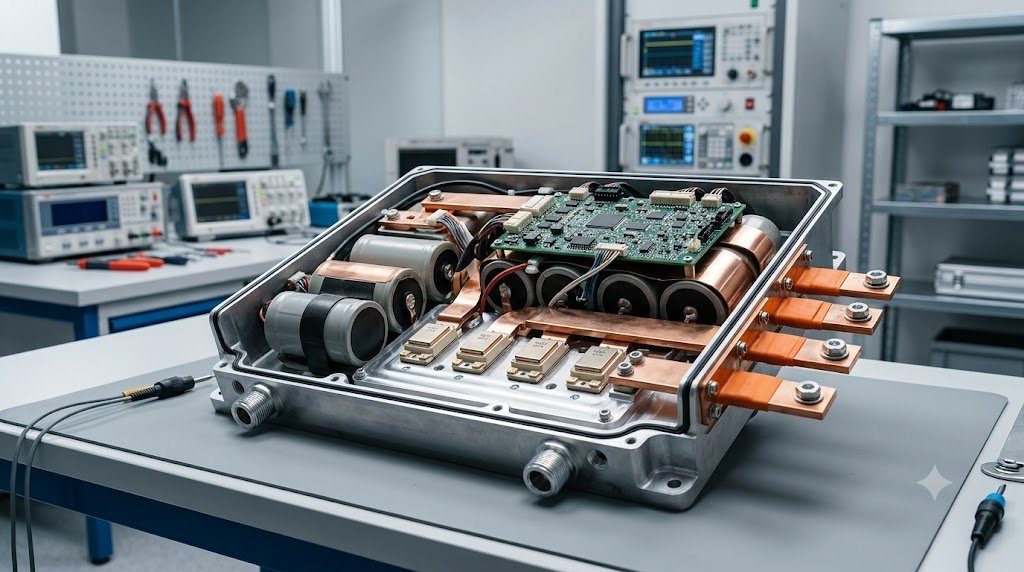
Traction Inverters: Silicon Carbide SiC MOSFETs, Space Vector PWM and 800V DC-Link Dynamics

Positioned inline between the high-voltage direct current (DC) traction battery pack and the multi-phase alternating current (AC) traction motor, the Traction Inverter is the primary power electronics gateway of an electric vehicle. Handling electrical powers ranging from 150 to over 600 kilowatts, the inverter converts battery DC into variable-frequency, variable-voltage 3-phase AC using high-speed semiconductor … Read more

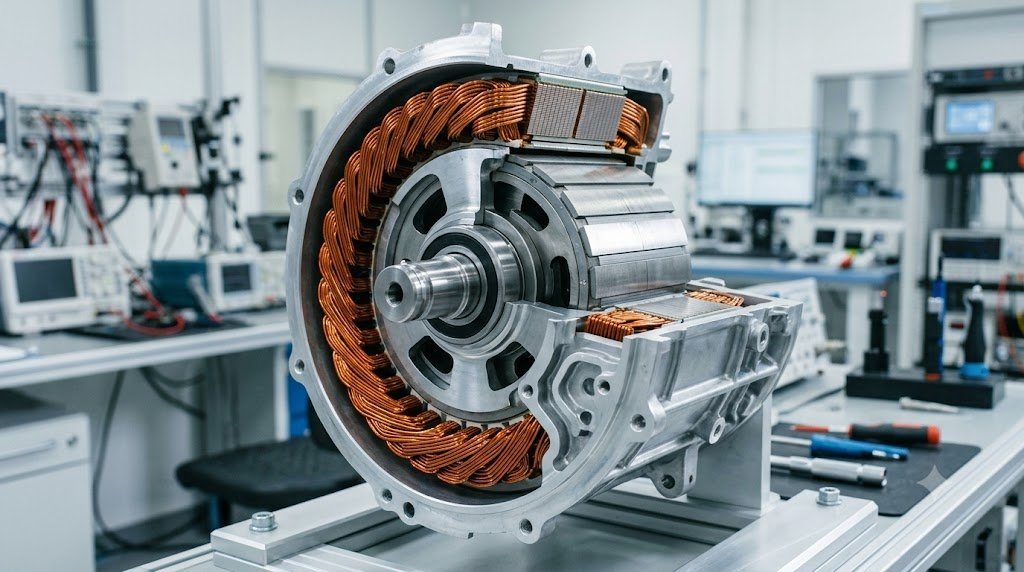
Electric Traction Motors: PMSM vs. AC Induction, Rotor Flux Dynamics and Field-Oriented Control

The traction motor is the electromechanical heart of an electric vehicle, responsible for converting high-voltage direct current (DC) supplied by the battery into rotational torque with instantaneous responsiveness and energy conversion efficiencies exceeding 94% to 97%. In modern production electric vehicles, two distinct alternating current (AC) motor architectures dominate the market: the Permanent Magnet Synchronous … Read more

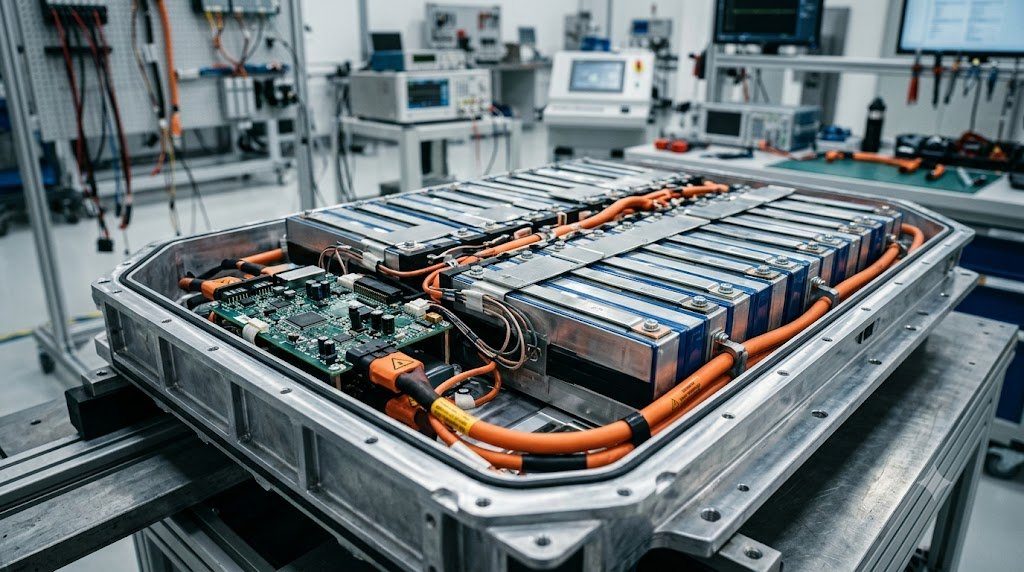
Lithium-Ion Battery Management Systems: Cell Balancing, State Estimation and Thermal Runaway Prevention

The high-voltage traction battery pack constitutes the electrochemical epicenter and highest-cost subsystem of every modern Battery Electric Vehicle (BEV). Storing between 50 and 120 kilowatt-hours (kWh) of electrical energy at potentials between 400V and 800V DC, automotive battery packs comprise thousands of individual lithium-ion cells connected in series and parallel. Operating this massive electrochemical substation … Read more